Excellent 4.6 out of 5 star rating on Trustpilot Trustpilot

AMD Dedicated Servers

AMD EPYC & Ryzen bare metal dedicated servers, deployed in 12 minutes with no virtualization overhead and no shared resources. Full hardware-level control for data-intensive workloads, high-traffic applications, and virtualization at scale.

Available Locations:
LT
NL
US
SG
SE
DE
CPU
4 to 128 physical cores
RAM
64 to 1152GB
Storage
2 to 10 disks
Bandwidth
30 to 100TB / month

Our Unique Features

AMD EPYC and RYZEN

Up to 128 cores, 1152GB RAM, 10Gbps uplinks. Deployed in 15 minutes.

Flexible Billing & 24/7 Support

Hourly or monthly billing. Engineers on call around the clock, 45-second response time.

Pay in Crypto

Bitcoin, Ethereum, Solana, and 20+ more. Built for how Web3 teams operate.

Most Popular AMD Dedicated Servers

Perfectly suited for demanding workloads, performance-intensive applications, and scalable enterprise solutions.

AMD RYZEN 9950X
LT
NL
US
SG
SE
DE
JP
CPU
32 threads / 16 cores
4.3GHz / 5.7GHz max
RAM
192GB
Storage
2x 1TB NVMe
up to 3 disks
Bandwidth
Up to 10Gbps
100TB / mo free traffic
$0.518 / hr
from
$257.58 / mo
AMD THREADRIPPER PRO 7965WX
LT
NL
US
SE
DE
JP
CPU
48 threads / 24 cores
4.2GHz / 5.3GHz max
Benchmark 38450
RAM
512GB
up to 768GB
Storage
2x 1TB NVMe
2x 4TB NVMe
up to 8 disks
Bandwidth
Up to 10Gbps
100TB / mo free traffic
$1.961 / hr
from
$973.62 / mo
AMD EPYC 9375F
LT
NL
US
SG
SE
DE
JP
CPU
64 threads / 32 cores
3.8GHz / 4.8GHz max
Benchmark 54390
RAM
384GB
up to 1152GB
Storage
2x 1TB NVMe
2x 4TB NVMe
up to 8 disks
Bandwidth
Up to 10Gbps
100TB / mo free traffic
$1.981 / hr
from
$983.56 / mo

AMD Dedicated Servers: Overview

What is an AMD server?

A bare metal server powered by AMD EPYC or Ryzen processors. You get full hardware access, no shared resources, and no virtualization overhead eating into your performance.

Why choose an AMD dedicated server?

High core counts, ECC memory, and hardware-level security at a lower cost than comparable Intel configs. Cherry Servers deploys them in 15 minutes with transparent, predictable pricing.

Every AMD Dedicated Server includes

Latest Zen Architecture

5nm and 7nm. More performance per watt, less heat.

Hardware-Level Security

SEV and ECC memory included as standard on every server.

Flexible NVMe Storage

Up to 10 NVMe slots. Add disks or upgrade as you scale.

100TB Free Traffic

Up to 100TB outbound included. Unmetered inbound traffic.

DDOS Protection

Network-level mitigation on every server, out of the box.

Free Backup Storage

Included on every plan. Extendable to 2TB as you grow.

20+ Payment Methods

Card, PayPal, Bitcoin, Ethereum, Solana, and 15+ more.

Why choose AMD Dedicated Servers

Excellent Price-to-Performance

AMD EPYC and Ryzen deliver strong multi-threaded performance at transparent, predictable pricing. No hidden fees, no cloud markup.

Fully Configurable Hardware

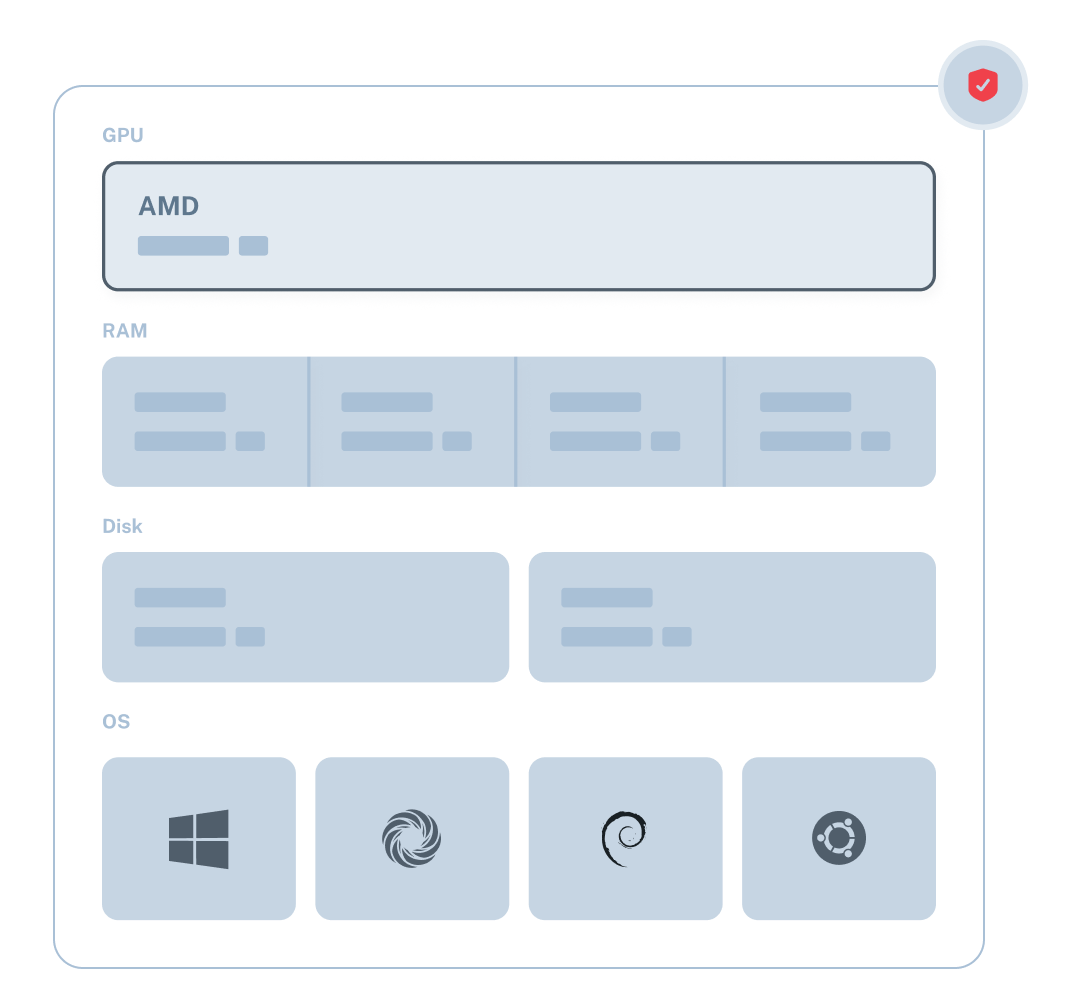
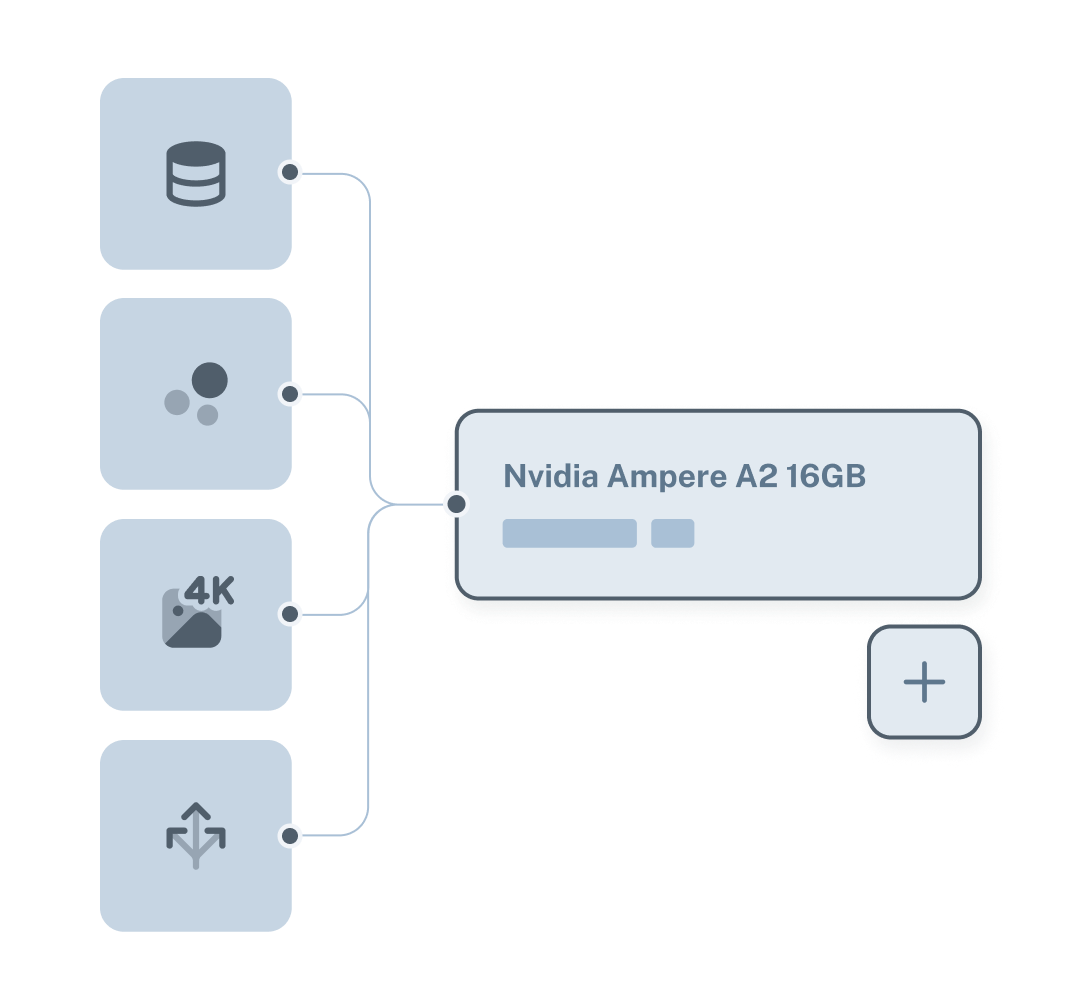
Expand RAM up to 1152GB, add NVMe storage, or attach a GPU accelerator. Root access included so you can run any OS, kernel, or security stack you need.

Single-Tenant Security

Your server, your resources. AMD's built-in hardware security features, combined with full hardware isolation, mean no noisy neighbors and no shared attack surface.

Streamlined Scalability

When your workload outgrows its current config, spin up a higher-spec EPYC machine in 12 minutes and migrate using your existing Terraform or Ansible scripts. No rewriting, no replatforming, no downtime drama.

AMD Dedicated Server Use Cases

Big Data & AI Workloads

High core counts and up to 1152GB RAM make EPYC servers a natural fit for ETL pipelines, real-time analytics, and AI/ML training. No resource contention, no throttling.

Virtualization and Containers

Run multiple VMs or containerized services on a single bare metal host. Cherry Servers' hardware-level isolation keeps workloads clean and independent.

Media Rendering and Encoding 

AMD's multi-threaded architecture handles 4K encoding and 3D rendering without the overhead of a shared environment slowing your pipeline down.

Blockchain Nodes & Validators

Solana validators and RPC nodes need consistent single-thread performance, fast NVMe I/O, and zero resource sharing. EPYC delivers all three. Cherry Servers powers 10% of the Solana network.

Supported Payment Methods

Our client success stories

FAQ

What is AMD EPYC used for?

AMD EPYC processors are great for large, multi-threaded workloads. People use them in virtualization, scientific simulations, and database management. EPYC chips feature many PCIe lanes for high-speed connections. They can manage heavy data transfers without any slowdown.

What is AMD Ryzen used for?

AMD Ryzen CPUs excel in both single-threaded and multi-threaded tasks. They are great for gaming, streaming, and daily computing. You should balance your budget with performance needs. Ryzen offers fewer cores than EPYC but has higher clock speeds, making it suitable for small to mid-sized workloads.

EPYC or Ryzen: Which is better?

EPYC features more cores, larger caches, and enterprise-specific tools, which are ideal for large-scale tasks. Ryzen gives you ultra-high CPU frequency, excellent for more demanding tasks and high-performance computing. Before choosing, consider your workload size, growth potential, and budget.

Can I customize my AMD server configuration?

Yes, you can. You can adjust RAM, select storage types like SSD or NVMe, and add GPU accelerators if needed. Since this is dedicated hardware, you can customize the server to fit your project. This might mean more memory for large data or special GPUs for AI tasks.

Do your AMD servers support GPU acceleration?

Yes, they do. You can add GPUs made for machine learning, rendering, or other heavy workloads. This makes it easier to work on tasks that use GPU power, like training AI models and real-time 3D processing. That way, your CPU stays fast.

What Operating Systems are available?

We support Ubuntu (20.04, 22.04, 24.04), CentOS (7), Debian (11, 12), AlmaLinux (8, 9), OpenSUSE (Leap 15), Windows Server (2019, 2022), VMware ESXi (7, 8), and any other custom Operating System via IP KVM self-install.

How does an AMD dedicated server compare to Intel?

AMD EPYC generally delivers more cores, higher memory bandwidth, and better price-to-performance than comparable Intel Xeon configs. Ryzen leads Intel on single-thread clock speeds in the same price bracket. Cherry Servers offers both if you need a direct comparison for your workload, our team can help you decide.

How quickly can I deploy an AMD dedicated server?

Pre-configured AMD servers deploy in 12 minutes through the Cherry Servers client portal, API, or CLI. Custom configurations typically take 24 to 72 hours depending on the build.

Are AMD EPYC servers good for databases?

Yes. EPYC's high core counts, ECC memory, and large memory capacity make it well-suited for PostgreSQL, MySQL, MongoDB, and other memory-intensive database workloads. Models like the EPYC 9375F support up to 1152GB RAM, enough headroom for in-memory databases at scale.

Can I migrate workloads between AMD server configurations?

Cherry Servers doesn't offer in-place vertical scaling, but you can provision a higher-spec AMD server in minutes and migrate using Terraform, Ansible, or your existing automation scripts. Moving from a Ryzen setup to an EPYC machine is straightforward if your stack is already infrastructure-as-code.

Looking for a different Cloud Infrastructure Solution?

Enterprise-Grade Hardware

Run complex workloads, host high-traffic websites, or manage custom infrastructure on a powerful Intel processor.

Flexible Dedicated Hosting with Linux OS

Run your resource-intensive applications with fast, secure Linux environments and total administrative control.

Why Developers Love Cherry Servers

Our customers consistently highlight speed, expertise, and personal attention from our team.

Start building today

Get up and running with your cloud project in a few minutes

Have questions about our server solutions or need assistance?

Fill out the form, and our team will get back to you!

No results found for ""
Recent Searches
Navigate
Go
ESC
Exit